You've probably done it more than once: leaned in close to the bathroom mirror, tilted your head, and studied that one tooth you've been quietly tolerating for years. Maybe there's an old chip, a worn edge, a darkened spot, or a front tooth that looks just a little shorter than the one beside it.
Eventually, "I should probably do something about that" turns into "Okay, I'm actually going to do something about that."
When that happens, there are several ways to improve or restore a tooth, but they aren't interchangeable. Dental bonding, veneers, and crowns each have a different purpose. The right choice depends on how much healthy tooth structure remains, what is causing the problem, where the tooth is located, and what you want the finished result to look and feel like.
At Traverse Dental Associates in Traverse City, our team, including Dr. Lumbrezer, looks at the condition of the tooth and your overall bite before recommending a cosmetic or restorative treatment. Sometimes the most conservative option is the best one. Other times, a tooth needs the protection that only a crown can provide.
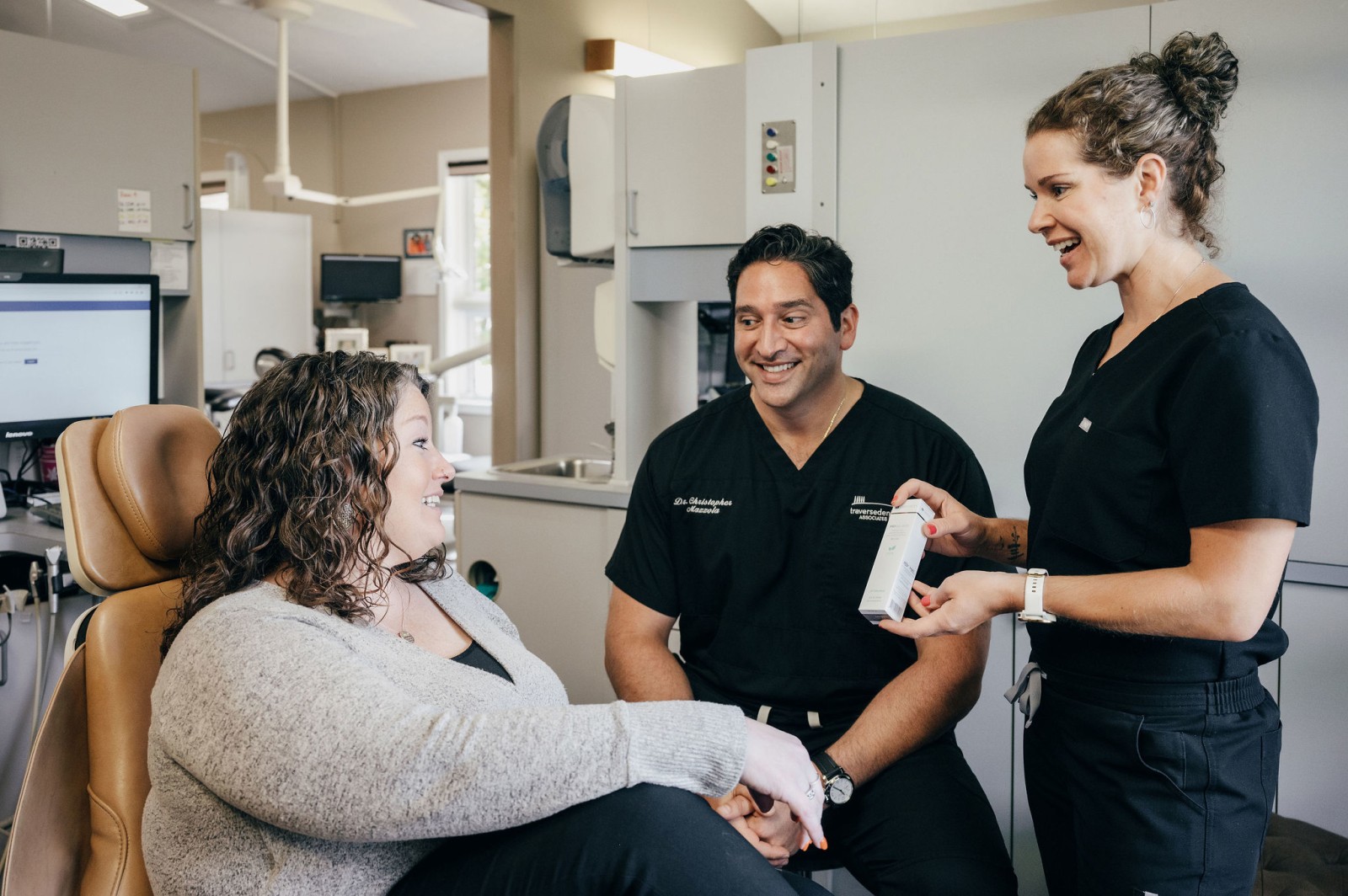
Bonding, veneers, and crowns can all improve the appearance of a tooth, but that's where much of the similarity ends.
Dental bonding uses a tooth-colored composite resin that is applied directly to the tooth. We shape the material to restore the tooth's appearance and then harden it with a curing light before polishing it.
Because bonding often requires little or no removal of healthy tooth structure, it is considered one of the more conservative cosmetic treatments. It can be particularly useful when the underlying tooth is healthy but has a relatively small cosmetic or structural concern.
Bonding may be considered for:
The tradeoff is that composite resin is not as resistant to staining or wear as porcelain. Depending on the location of the bonding, your bite, and your habits, it may eventually need polishing, repair, or replacement.
For the right situation, though, that can be a worthwhile tradeoff. You're addressing a specific concern while preserving the natural tooth underneath.
Veneers take a different approach. Rather than adding material to a small area of the tooth, a veneer is a thin, custom-made shell that is bonded to the visible front surface.
Veneers can be used to change several aspects of a smile at once, including the shape, length, proportion, and color of the teeth. They're often considered when someone wants a broader cosmetic change involving multiple front teeth.
Veneers may be appropriate for concerns such as:
Because some enamel is typically removed to accommodate the veneer, this is a more involved and permanent decision than bonding. The tooth will need a restoration going forward, so careful planning matters.
Crowns are different from both bonding and veneers because they cover the entire visible portion of a tooth.
A crown is generally considered when a tooth has been weakened or damaged enough that it needs more substantial protection. The goal is not simply to make the tooth look better. It's to help restore its strength and function while also creating a natural appearance.
A crown may be recommended when a tooth has:
In these situations, a veneer or bonding may not provide enough coverage or support. A crown can surround the remaining tooth and help distribute biting forces more evenly.
Modern crowns can also be highly cosmetic. Tooth-colored and all-ceramic options can be designed to blend with the surrounding teeth, so restoring a damaged tooth doesn't necessarily mean sacrificing its appearance.
Bonding is sometimes dismissed as a temporary or less sophisticated alternative to veneers. That's not necessarily the case.
When the problem is small and the underlying tooth is healthy, preserving natural enamel can be a major advantage. There's little reason to remove healthy tooth structure simply to address a minor chip or change in shape if bonding can achieve the result you're looking for.
For example, imagine a front tooth with a small chip from an old injury. If the tooth is otherwise healthy and the bite is stable, bonding may allow us to restore the missing portion without significantly altering the natural tooth.
The same can be true for a small gap or a slightly uneven edge.
Bonding can also be appealing when you want to make a relatively small change without committing to a more extensive cosmetic treatment.
There are limitations, however. Composite resin can stain more readily than porcelain, and it may be more susceptible to chipping, particularly when it's placed along an edge that receives significant biting forces.
That means bonding isn't necessarily the best option for every cosmetic concern. It's about matching the material and treatment to the problem.
Veneers become more relevant when you're looking beyond one isolated imperfection and thinking about the overall appearance of several teeth.
For example, perhaps your teeth are healthy but you've always disliked their proportions. Maybe they're relatively short, have uneven edges, or have discoloration that whitening cannot adequately address. If you're looking to create a more consistent appearance across several front teeth, veneers may offer a level of control that bonding cannot.
The planning process is particularly important here.
A cosmetic treatment shouldn't be designed by looking at individual teeth in isolation. We also need to consider how the teeth relate to your lips, smile, facial proportions, and bite.
That includes questions such as:
These details can make the difference between teeth that simply look whiter or straighter and a smile that looks natural within the context of your face.
It's also important to understand that veneers are a commitment. Because enamel preparation is generally required, they're not something we recommend simply because they're popular or because someone wants a dramatic cosmetic change.
The goal is to determine whether the benefits make sense for your specific teeth.
Sometimes someone comes in wanting to improve the appearance of a tooth, but the evaluation reveals that the tooth needs something more fundamental.
If a tooth has a large fracture, extensive decay, significant structural loss, or has undergone root canal treatment, cosmetic bonding or a veneer may not provide enough protection. That's where a crown can make more sense.
The purpose of a crown is to restore the tooth's strength and function while also providing a natural-looking appearance. In other words, the cosmetic improvement is important, but it's not the primary reason for choosing the treatment.
This distinction matters. If a tooth is structurally compromised, choosing a treatment based only on appearance could leave the underlying problem unaddressed. In that situation, protecting the tooth comes first.
Your bite also matters. If grinding or clenching contributed to the damage in the first place, we need to understand those forces before placing a new restoration. Otherwise, the restoration may be exposed to the same stress that caused the original problem.
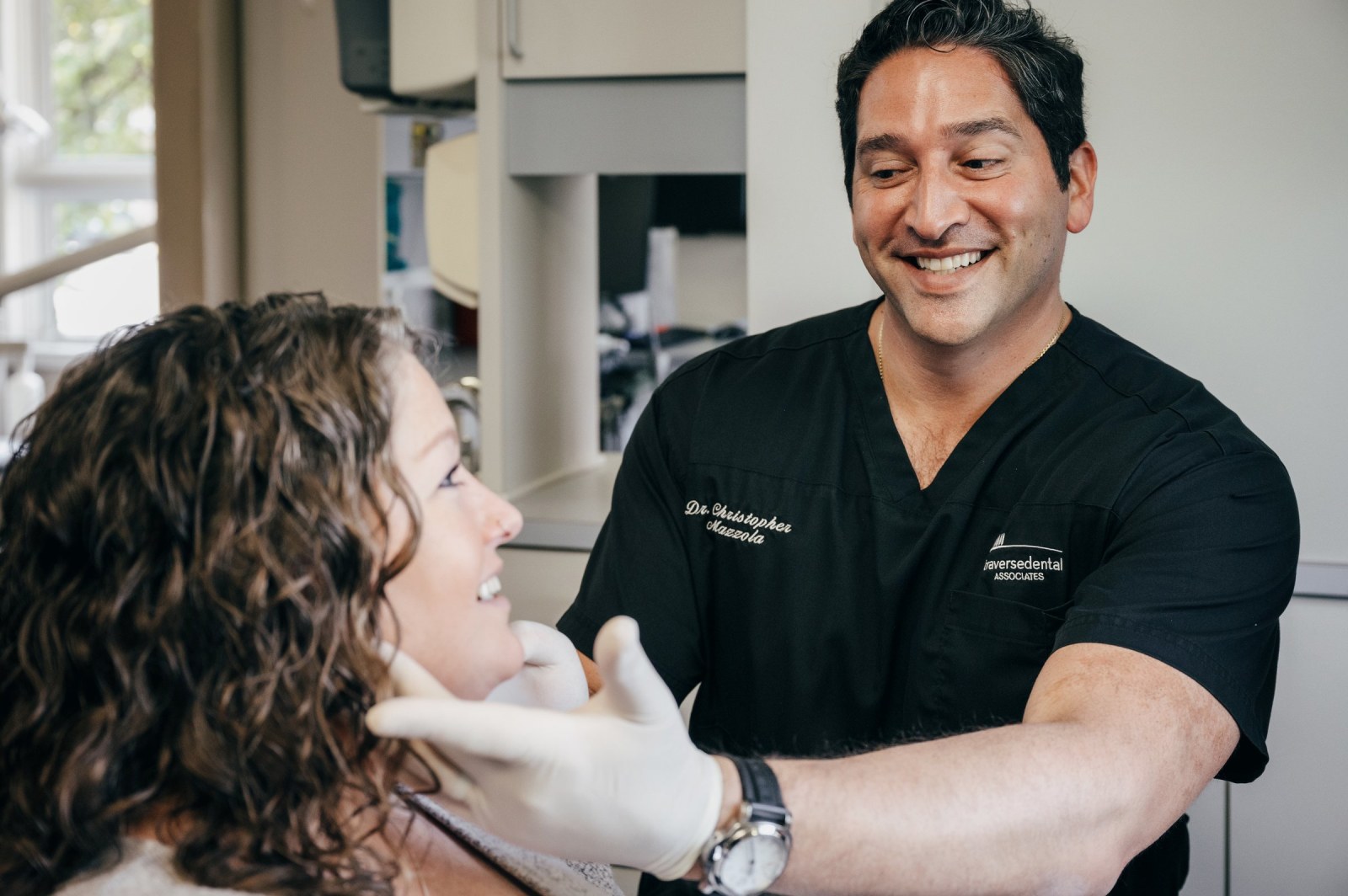
There isn't a universal rule that says a particular type of tooth always needs bonding, veneers, or a crown. The recommendation comes from looking at the tooth itself and understanding what you're trying to accomplish.
This is one of the most important considerations. If most of the tooth is healthy and the concern is primarily cosmetic, a conservative treatment may be possible. If significant tooth structure has been lost, a restoration that provides greater coverage and protection may be more appropriate.
Your teeth don't exist independently. They work together every time you chew, speak, and clench. If you grind or clench, that can place additional stress on bonding, veneers, and crowns. Understanding your bite helps us choose a restoration and treatment approach that can withstand those forces.
A single chipped tooth is a different situation from several front teeth with differences in shape, size, or color. When multiple teeth are involved, we can consider how they look together rather than treating each tooth independently. This is particularly important for cosmetic cases where symmetry and proportion are part of the goal.
It's also important to talk about what bothers you about your smile. You might initially think you need veneers when bonding would address the concern. Or you might come in asking for a cosmetic treatment only to discover that the tooth needs structural protection first. That's why the consultation matters. The goal isn't to choose the most extensive treatment. It's to understand the problem and determine what approach makes sense.
In some situations, yes. Bonding can address a smaller concern now, while veneers can be considered later if you decide you want a more comprehensive cosmetic change. The appropriate sequence depends on the condition of the teeth and the treatment you're considering.
Porcelain veneers generally have greater resistance to staining and wear than composite bonding, but longevity varies considerably based on the tooth, your bite, oral hygiene, and habits such as grinding or clenching. Bonding is also easier to repair or modify when it does wear or chip.
Generally, yes. Veneers are primarily designed to improve the appearance of the visible surface of a tooth. Crowns are typically used when a tooth needs more substantial structural support, although modern crowns can also provide excellent cosmetic results.
Not necessarily. Crowns are often recommended when a tooth has lost enough structure that a filling or more conservative restoration may not provide adequate protection. The reason for a crown varies from tooth to tooth.
Yes. Grinding and clenching can put additional stress on restorations, potentially contributing to wear, chipping, or damage. If you grind or clench, that should be part of the conversation before cosmetic or restorative treatment is planned.
The best way to determine that is through an examination. We'll look at the tooth's structure, your bite, your overall oral health, and what you're hoping to change before recommending a treatment.
If you've been tolerating that chipped, worn, discolored, or uneven tooth for long enough, the next step doesn't have to be deciding between bonding, veneers, and crowns on your own.
At Traverse Dental Associates in Traverse City, we'll start by looking at what's actually happening with the tooth and talking through what you'd like to change. From there, we can explain which options are appropriate, what each involves, and why we recommend one approach over another.
Sometimes the answer is a simple repair. Sometimes a tooth needs more protection. And sometimes the best solution involves looking at several teeth together to create a more balanced result. The goal is to preserve as much healthy tooth structure as possible while giving you a result that looks natural and functions well.
If you're ready to stop tolerating that tooth, call Traverse Dental Associates at (231) 947-0210 to schedule a consultation.
We look forward to meeting you. Call 231-947-0210 to set up your first visit. We'll be in touch soon.