Cosmetic Dentist in Traverse City, MI

Cosmetic dentistry is about making your smile look like you again: brighter, evenly shaped, and natural enough that nobody can tell where the dentistry starts.
Dr. Lumbrezer and the team at Traverse Dental Associates plan that work around your whole face and your bite, not just the six teeth that show in a photo. A smile that looks beautiful but chews poorly won't stay beautiful for long, which is why a smile makeover here always begins with the way your teeth fit together.
As a fourth-generation practice on S Garfield Ave, we've built our reputation on dentistry that lasts. Most cosmetic conversations here start with what your teeth are actually doing, not only how they look, because lasting results depend on a healthy, stable foundation. Sometimes the answer is as simple as whitening, and other times it's veneers or reshaping worn teeth.
Call us at (231) 947-0210 to set up a consultation.
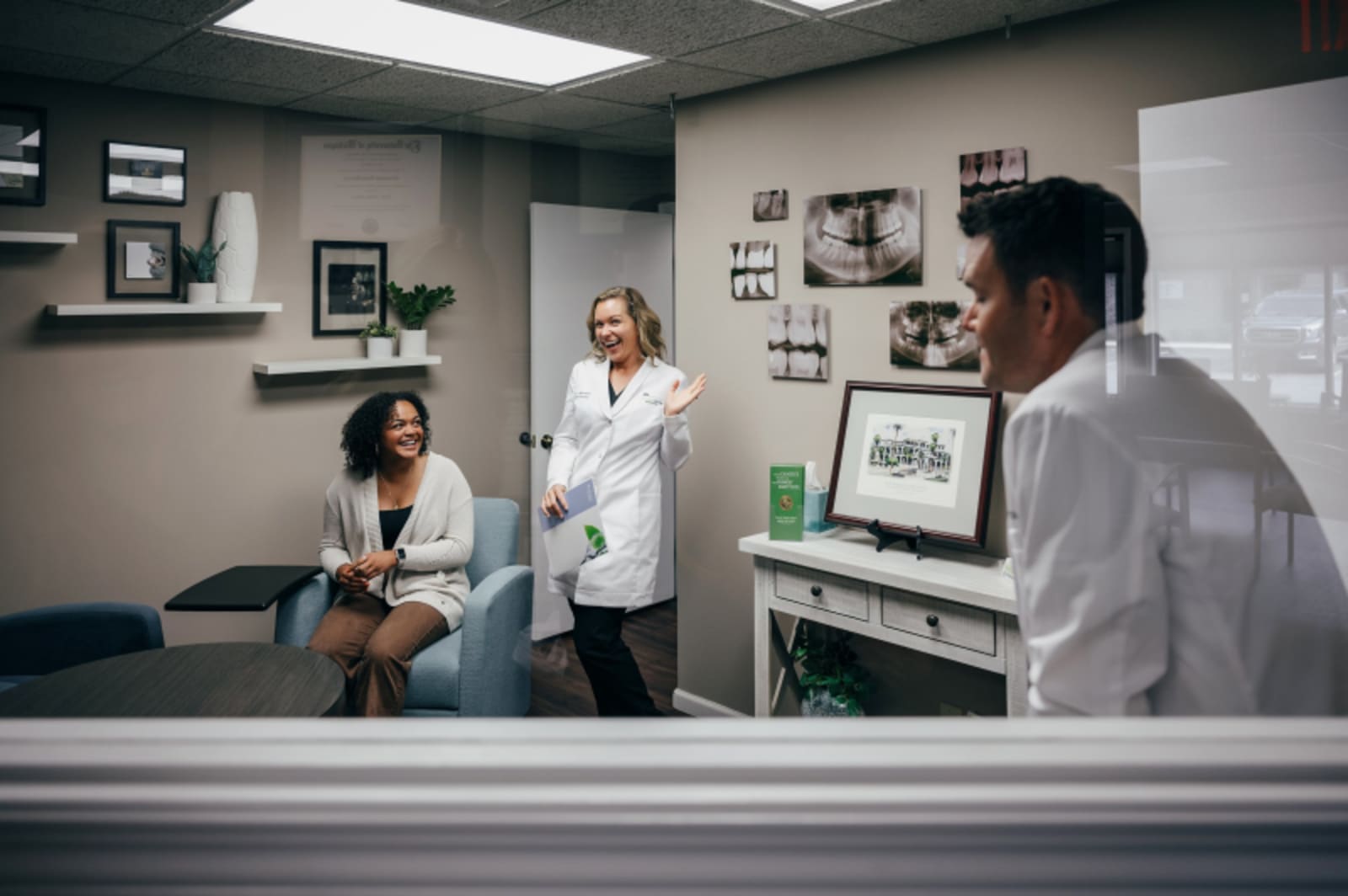
Cosmetic work tends to go wrong when it skips the diagnosis, so before anything else, we take the time to understand what's actually going on. The sequence below is what we follow whether you're looking at a simple whitening or rebuilding a full arch.
Before we look in your mouth, we ask what's been bothering you and for how long. Some people come in wanting one chipped front tooth fixed, while others have spent twenty years quietly disliking the color of their teeth. Those are genuinely different problems, and they call for different solutions, so we want to hear your story before we start forming a plan.
From there, we evaluate your teeth, gums, jaw joints, and the way your teeth meet when you chew. Worn edges, chipped enamel, and teeth that keep breaking are often bite problems showing up in cosmetic clothing, and treating the surface without addressing the cause is a short-term fix at best. When the jaw joint itself is involved, that becomes a conversation about TMD treatment before any cosmetic work begins.
We design the smile from the outside in, taking into account your lip line, midline, face shape, and how much tooth shows when you talk and smile naturally. Photos and models help us map everything out so you can see the plan and understand the reasoning behind it before we ever pick up an instrument.
Gum health and any active decay are addressed first, followed by alignment or bite work if it's needed. Cosmetic restorations come last, placed on a stable and healthy foundation so they have the best chance of lasting. Some plans wrap up in a single visit while others unfold over several months, and we'll tell you which category yours falls into right from the start.
Once treatment is complete, we check the fit, the shade, and how everything feels when you chew. If clenching or grinding is part of your history, we'll talk about a nightguard or bitesplint to protect what we've built together. After that, you're back on a regular schedule with our general dentistry team, who keep a close eye on the work over the long haul.
Color is usually the first thing people notice, and professional whitening lifts staining that toothpaste simply cannot reach. Porcelain restorations go a step further, resisting the staining that natural enamel picks up from coffee and red wine over time. We can help you decide whether in-office or take-home whitening fits your schedule and sensitivity better.
Beyond color, cosmetic dentistry restores shape and symmetry. Chipped, worn, or uneven teeth can be brought back to proportions that fit your face rather than a stock template, which is the thinking behind porcelain veneers and a carefully planned smile makeover. Sometimes the frame matters just as much as the teeth themselves, and gum contouring can even out a gummy or uneven gumline in ways that transform a smile more than any restoration could on its own.
Good cosmetic dentistry also improves how your teeth work, not just how they look. Closing gaps, restoring worn edges, and correcting alignment with clear aligner therapy make teeth easier to clean and distribute chewing force more evenly. The appearance holds up over time because the function underneath it does. Well-planned porcelain, protected from grinding and cared for properly, measures its life in many years rather than a few.
The result is a smile you stop thinking about. You stop angling your head in photos and reaching for your hand mid-laugh. That kind of confidence is quiet, and that is exactly the point.
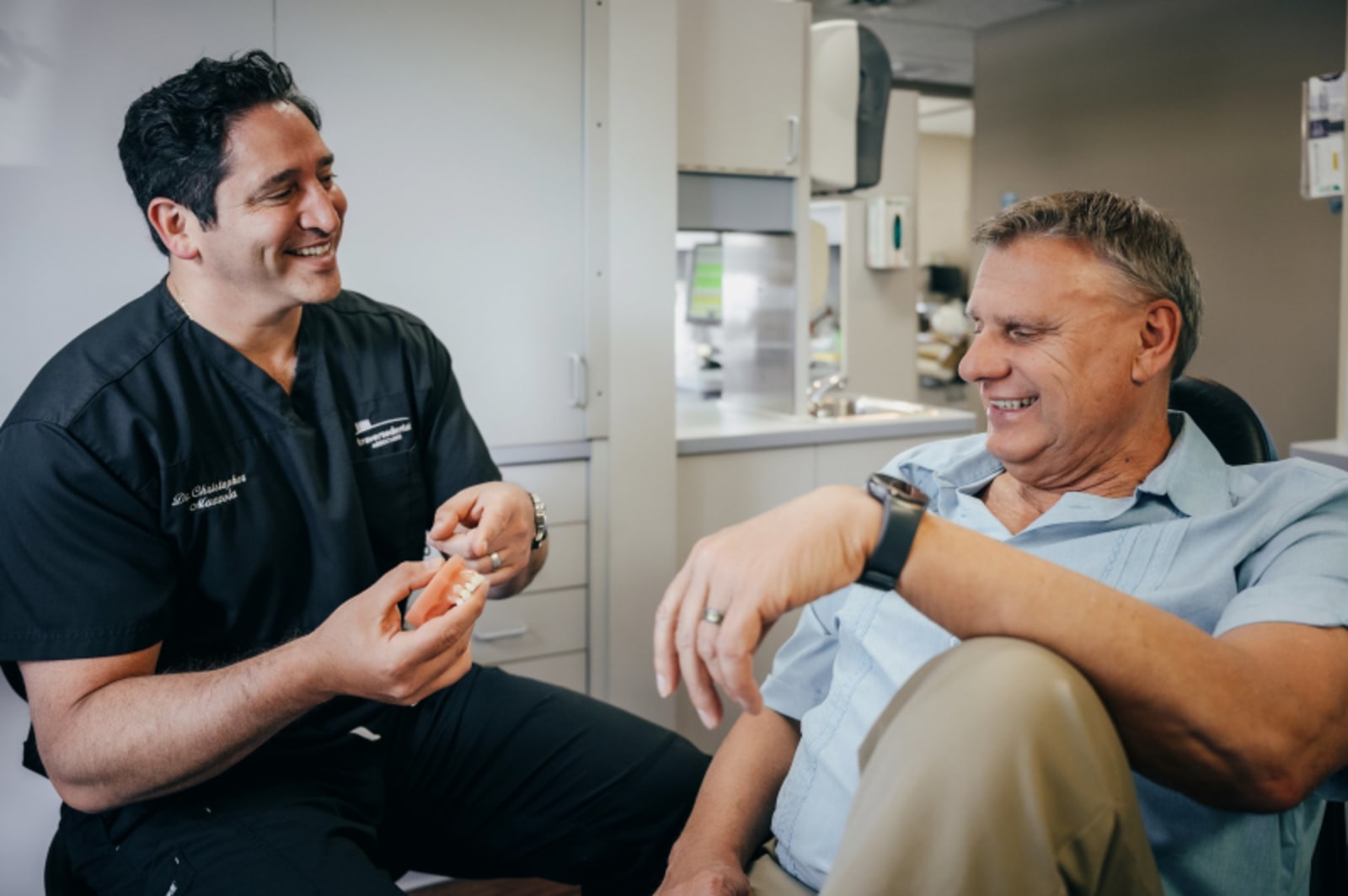
Most adults with reasonably healthy teeth and gums are candidates for some form of cosmetic treatment. The real question is usually which option fits best, not whether anything can be done at all. You're likely a good fit if you're dealing with any of the following:
Some situations simply call for a different starting point before cosmetic work begins. Active gum disease or untreated decay needs to be resolved first, because porcelain placed over an unhealthy foundation won't hold up the way it should, which is why gum disease treatment always comes before cosmetic restorations.
Heavy clenching or grinding gets addressed alongside the cosmetic plan, sometimes with Botox therapy to relieve the overworked jaw muscles. And when teeth are already missing or badly broken down, dental implants or a full mouth reconstruction may be a better fit than veneers alone. None of that means the answer is no. It just means the path looks a little different.
Cosmetic dentistry fits into a working life more easily than most people assume, and the timeline varies quite a bit depending on what you're having done. Here is a general sense of what to expect at each stage.
Before you start, get your cleaning done and any small repairs handled. If you're planning to whiten, do it before veneers or bonding are made, because porcelain and composite don't change shade later and we match new work to the color you intend to keep.
Afterward, brush and floss the way you always should, including around the margins of any new restorations, and keep your cleaning appointments so we can catch small issues early. If we made you a nightguard, wear it consistently, because grinding is the fastest way to chip porcelain, and if clenching is part of the picture, our TMD treatment can address the cause rather than just the symptom.
Keep in mind that natural enamel continues to pick up staining even when porcelain doesn't, so occasional touch-up whitening helps keep everything matching. And if something feels high or off when you bite, let us know right away, because a quick adjustment can protect years of work.
Cosmetic treatment is priced according to what the case actually involves: the number of teeth, the materials used, whether bite or gum work is part of the plan, and how much lab craftsmanship the restorations require. Whitening a few shades brighter and rebuilding ten front teeth with veneers are very different projects, and publishing a single number for either would mislead you in one direction or the other.
Before treatment begins, you'll receive exact figures for your plan in writing, with the full sequence laid out so nothing comes as a surprise. Most cosmetic procedures are elective and fall outside dental insurance coverage, though work that restores function alongside appearance, such as correcting a worn bite or replacing a missing tooth with a dental implant, is sometimes partially covered depending on your plan. We'll review your benefits and payment options together so you can make decisions at your own pace, and we'll be clear about which parts of a phased plan are time-sensitive and which can wait.
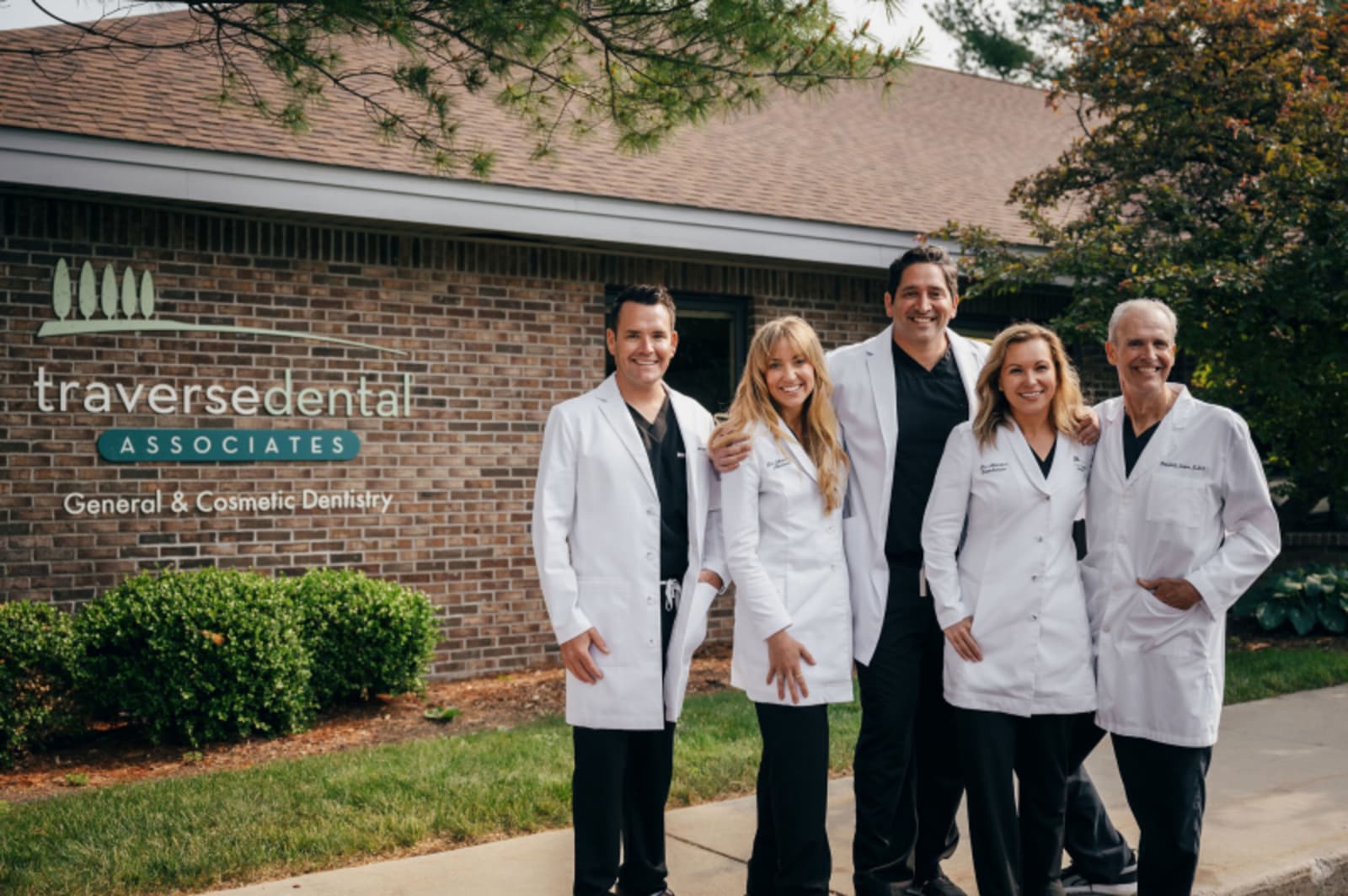
Traverse Dental Associates has been part of this community for four generations, and the same family still runs it today. That kind of continuity shapes the way we think about dentistry. We have no interest in work that looks impressive in month one and starts failing by year five, which is why the phrase "long-lasting dentistry" comes up so often around here.
That same philosophy carries into how we built our team. Bite, function, and esthetics are planned together by the people who actually know each other, not handed off between strangers:
Bonding is tooth-colored composite shaped directly onto your tooth in one appointment, making it a conservative and more affordable option for a single chip or small gap. The tradeoff is that it stains over time and chips more easily than porcelain.
Veneers are custom porcelain crafted in a lab, so they resist staining, hold their shape, and look more lifelike across multiple teeth. Bonding is often the right first move, while veneers tend to be the longer-term answer when a broader change is the goal.
They shouldn't, and that's really the point of designing from the face rather than from a shade guide. By planning proportions, translucency, and shade together, the result reads as your smile on a good day rather than as dental work.
Whitening and bonding involve little to no discomfort, and veneer preparation is done with local anesthetic, which most patients describe as unremarkable. If dental anxiety is a barrier for you, sedation is available here, and we would much rather you tell us up front so we can make the experience comfortable from the start.
It's usually a bite problem showing up as a cosmetic one. Flattened edges, chipping, and teeth that keep fracturing typically come from grinding or a bite that isn't distributing force well. We'll evaluate the joints and the way your teeth meet through a TMD evaluation and address the underlying cause before restoring the appearance, because skipping that step means the new work tends to wear down the same way.
With good home care, regular cleanings, and protection from grinding, porcelain restorations last many years. Whitening depends more on your habits, so coffee and red wine drinkers tend to touch up more often. Bonding falls somewhere in between and may need refreshing sooner. We'll give you realistic expectations for your specific plan before anything begins.
Not at all. Plenty of plans are phased over months or longer, and we'll walk you through which steps are time-sensitive for your health and which are purely about appearance and can wait. Your consultation is the right place to map out that sequence, and nothing gets scheduled until you're ready.
The first appointment is really just a conversation. You tell us what you'd like to change, we take a careful look at your teeth, gums, and bite, and you leave with a clear picture of your real options and what each one involves.
That might mean a straightforward cosmetic dentistry treatment, a set of veneers, or a plan to get your gums and bite healthy before anything else happens. Nothing gets decided until you're ready to decide it.
When you're ready to take that first step, call Traverse Dental Associates at (231) 947-0210 or send us a message. We're at 555 S Garfield Ave in Traverse City, open weekdays from 7:30 to 4:00.
We look forward to meeting you. Call 231-947-0210 to set up your first visit. We'll be in touch soon.
