Candid Aligners in Traverse City, MI

Candid aligners are clear, removable trays that move your teeth into better alignment without brackets or wires. At Traverse Dental Associates, every step of your treatment is planned and monitored by one of our dentists in person. Dr. Lumbrezer and the team see you here at our Garfield Avenue office, so your progress is checked by someone who knows your bite and your dental history, not reviewed from a photo you uploaded.
Most of the adults who ask us about aligners have been thinking about it for years. Teeth shifted after old braces, a front tooth that crowded in, a gap that always shows up in photos. Traditional braces felt like the wrong move at 45, and the mail-order kits raised more questions than they answered.
Clear aligner therapy done inside a dental practice sits comfortably between those two options. Straighter teeth are also easier to keep clean, which is why we treat alignment as part of your overall dental care rather than a purely cosmetic add-on. If you'd like to know whether it fits your situation, get in touch or call us at (231) 947-0210 and we'll set up a consultation.
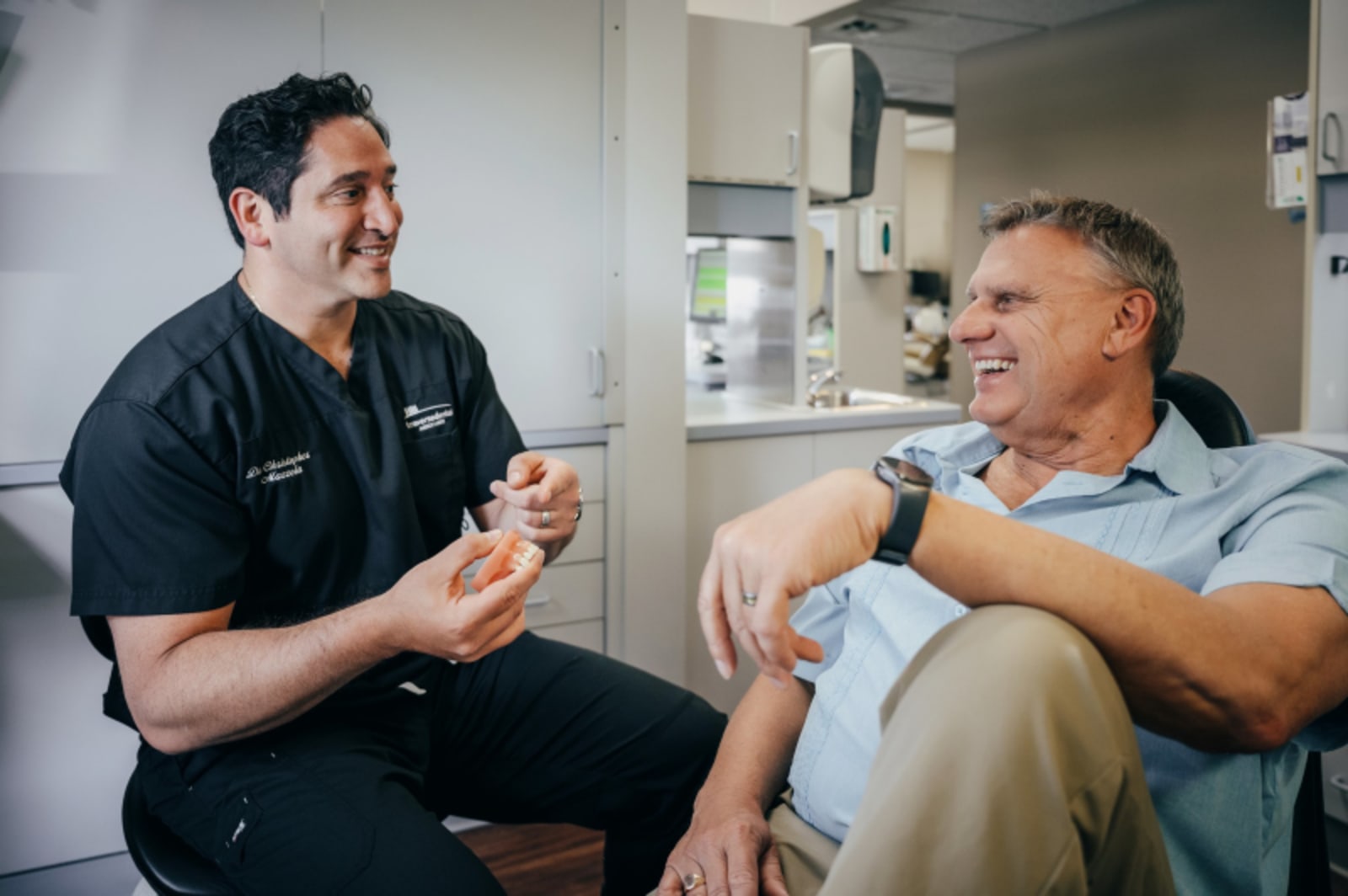
We start by looking at your teeth, gums, and how your bite comes together. Moving teeth puts force through everything holding them, so untreated gum inflammation, a cracked filling, or a joint that clicks and aches all need to be addressed before trays go in. If your exam turns up a jaw joint issue, we can take care of it through our TMD treatment before aligners start.
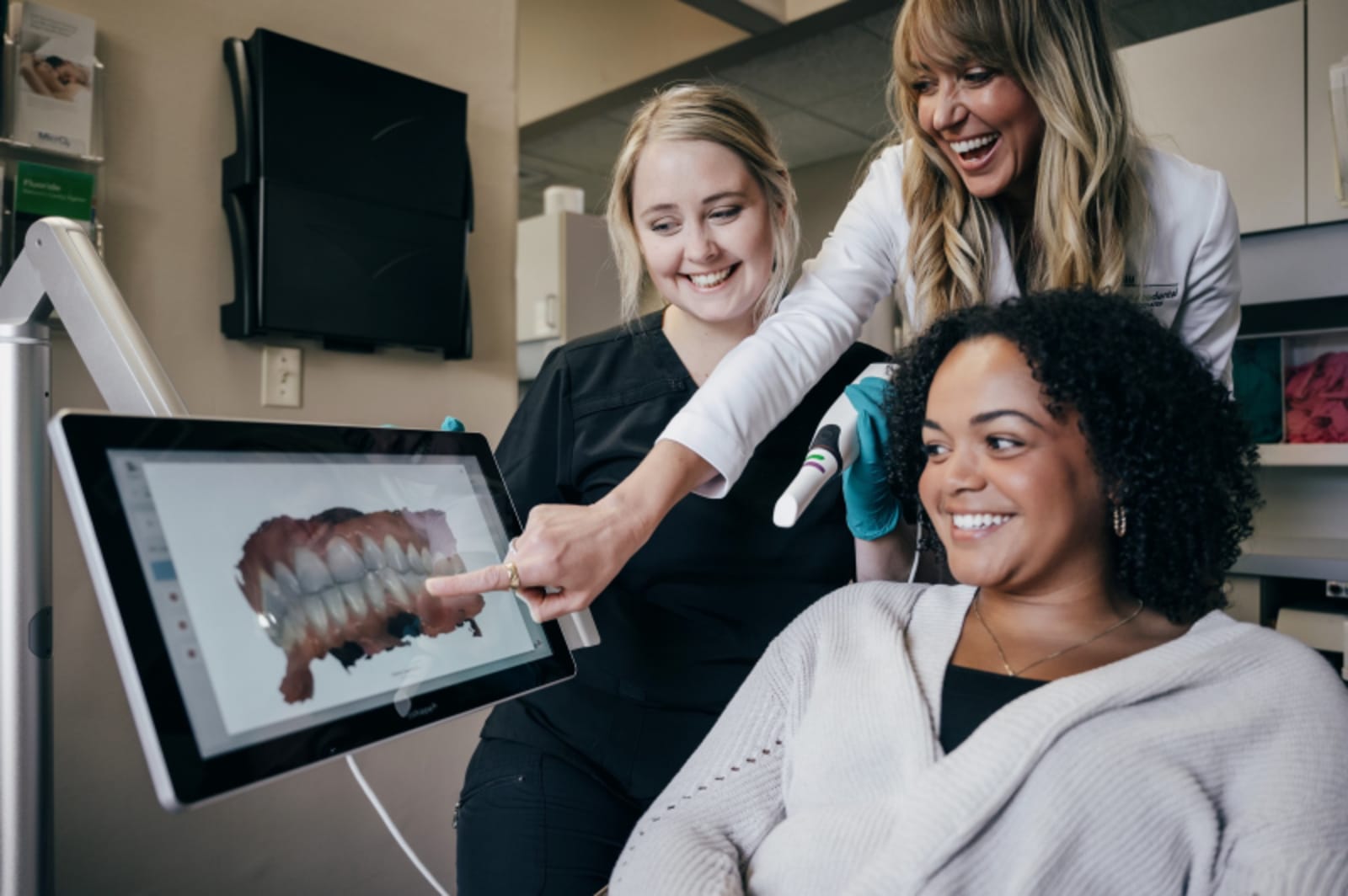
We scan your teeth digitally to build your case. It takes a few minutes, nothing sets in your mouth, and it gives us a precise three-dimensional record to plan your tooth movement from.
You will see where your teeth are now, where they are headed, and roughly how many trays it will take to get there. If aligners alone will not get you the result you are picturing, we will tell you and walk you through what would work better. Sometimes that is cosmetic dentistry such as veneers, and sometimes it is a combination of both.
You move to a new set of trays on the schedule we give you. They come out when you eat, drink anything other than water, and brush. They go right back in after. The first day or two in a new set feels snug, and that pressure is simply the tooth movement happening.
You come in periodically so we can compare what is actually happening in your mouth to the plan. If a tooth is lagging or a tray is not seating fully, we catch it early and make the right adjustment.
Clear aligner therapy tends to work well if you're dealing with:
Aligners are not the right fit for everyone. If your bite involves a larger jaw discrepancy, teeth that are severely rotated, or movement that goes beyond what trays can handle, we'll be upfront about that. Active gum disease, untreated decay, or jaw joint pain that flares up regularly also need to be addressed before any tooth movement begins.
If aligners are not the right tool for your situation, we will walk you through what is. That might be bite and occlusion treatment, splint therapy for a painful joint, veneers or bonding to improve shape and color rather than position, or a referral for orthodontic care that goes beyond what aligners can do.
One more thing worth saying: success with aligners depends on actually wearing them. If the timing is not right for that kind of daily commitment, tell us at the consultation. We would rather help you find the right moment than have you start a treatment that does not finish the way you hoped.
Many adult cases with mild to moderate crowding or spacing finish in a matter of months rather than years. Your timeline depends on how far your teeth need to travel, so your estimate comes from the scan and treatment plan, not from an average.
A typical rhythm looks like this:
Wear time is the one variable you control. Hitting roughly 22 hours a day keeps you on schedule. Regularly leaving trays out stretches treatment and can mean re-scanning to build a corrected plan.
Before your first tray goes in, we want to make sure your mouth is in a good place to start. If there's a cavity you've been putting off or your gums have been a little tender, we'll take care of that first. It's not a delay. It's just making sure the foundation is solid so your results actually hold. Come to your consultation with any questions about wear time or how the trays fit into your daily routine. There are no wrong questions here.
The day-to-day routine is pretty simple. Always brush before putting your trays back in, because you don't want to trap food or bacteria against your teeth for hours. Rinse your trays with cool water and store them in their case whenever they're out. Hot water can warp the plastic, and leaving them on a napkin is a good way to accidentally throw them away. Skip coffee, tea, and anything sugary while your trays are in, since liquids seep under the tray and sit against your enamel. Keep up with your regular hygiene visits too; that's when we catch anything small before it becomes a problem.
This is the part people sometimes underestimate: your teeth will want to drift back. That's just how teeth work. They respond to pressure over time, and without a retainer holding them, they'll slowly shift. Wearing your retainer as directed is what keeps the result you worked for. Bring it to your checkups so we can make sure it still fits well, and let us know right away if it cracks or starts feeling loose. Once your smile is where you want it, it's also a great time to talk about whitening. Your teeth will be in the best position to show it off.
We don't list a set price for aligners, and that's not us being evasive. The cost genuinely depends on your situation. How much your teeth need to move, how many trays that requires, and whether anything needs to be addressed beforehand all factor in. What you will get at your consultation is a clear, itemized estimate for your specific case, before you commit to anything.
If you have dental insurance, some plans include an orthodontic benefit that can apply to clear aligner therapy, though coverage varies a lot and many adult plans limit or exclude it entirely. Our team will help you sort through your benefits so you know exactly what's covered, and we'll walk you through payment options for whatever remains. And if aligners turn out not to be the right fit for you, we won't leave you without a path forward. We can explore cosmetic dentistry options or look into TMD treatment if your bite or jaw comfort is part of the picture.
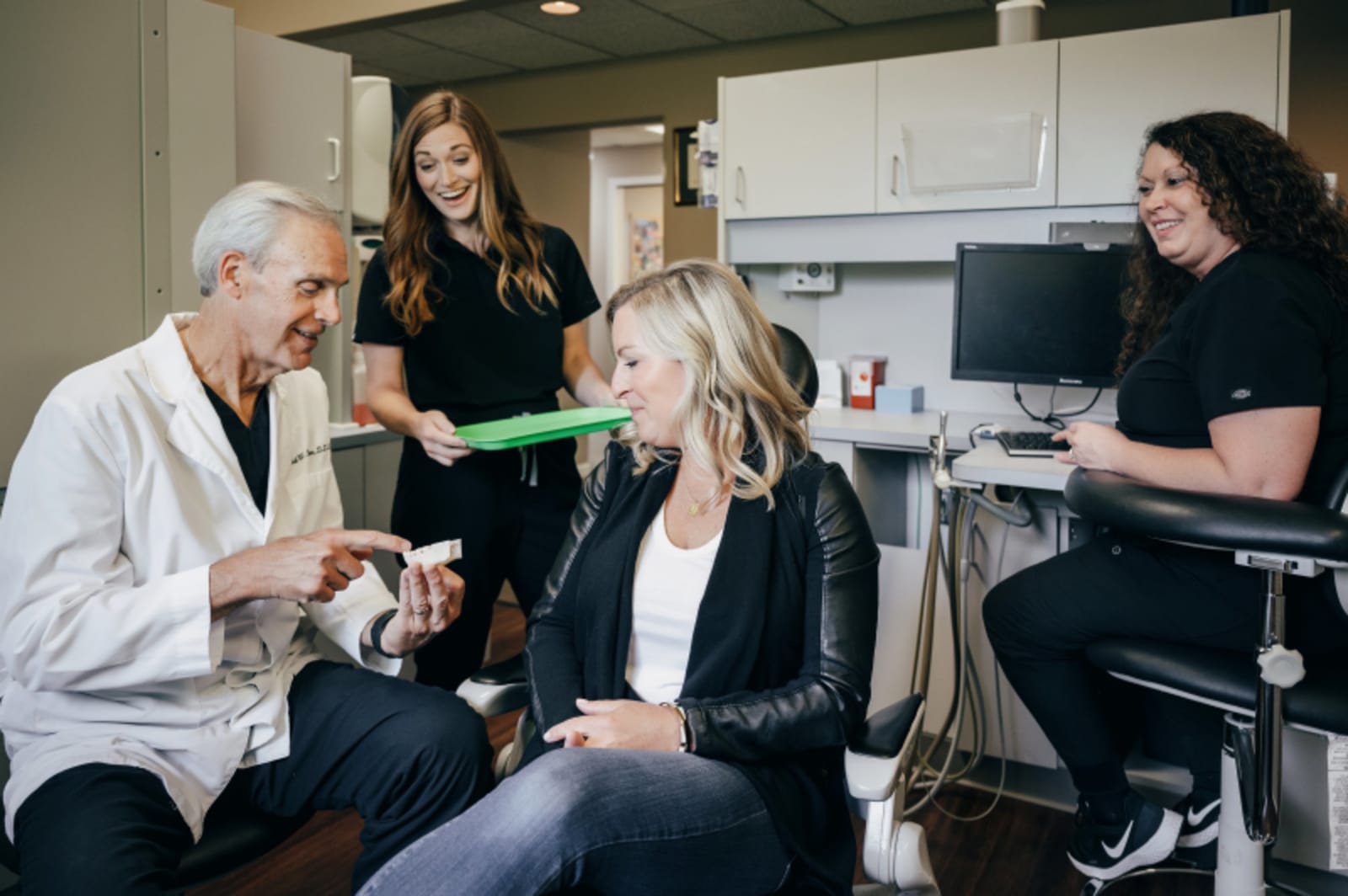
We've been caring for Traverse City families for four generations, and a lot of the families we see today have been coming here for three generations of their own. That kind of history means we know our patients well, and it shows in how we approach treatment: unhurried, thorough, and built to last.
When it comes to aligner treatment, here's what sets us apart:
The trays look similar, but the care behind them is very different. Mail-order kits skip the in-person exam, which is where a dentist checks for gum disease, old restorations that need attention, bite issues, and jaw joint concerns before any tooth movement starts. Here, a dentist plans your case, checks in with you in person throughout, and makes adjustments if something isn't going as expected.
Both use a series of clear trays to move your teeth gradually. The difference comes down to how each system's technology handles certain types of tooth movement. Our dentists are familiar with both and will recommend whichever is the better fit for your specific case. It's about what works for your teeth, not brand preference.
A little pressure or tightness for the first day or two after switching to a new tray is completely normal. That's your teeth actually moving. Sharp pain or discomfort that doesn't go away is not normal, and we'd want to hear about it right away.
Most people won't. The trays are thin, clear, and sit snugly over your teeth. A few patients notice a small change in how they sound when they talk during the first few days, but that fades quickly as you get used to wearing them.
Not without looking into it first. Grinding and jaw joint issues change how forces travel through your teeth, and moving teeth in that environment without addressing the root cause can make things worse. We always evaluate your bite and jaw health before recommending aligners, and if TMD (TMJ) treatment needs to come first, we handle that here too.
Not at all. New patients are always welcome. Everyone starts in the same place, a full exam and a digital scan, because we need to make sure your teeth and gums are in good shape before any movement begins.
If your teeth have shifted over the years and you've been thinking about doing something about it, the first step is simple. Just come in. We'll take a look, do a digital scan, and give you a straight answer: whether clear aligners are a good fit, what the process would look like, and what it would actually cost. If cosmetic work or treatment for jaw discomfort would get you a better result, we'll tell you that too.
Dr. Lumbrezer and the team would love to meet you. Give us a call at (231) 947-0210. We're at 555 S. Garfield Ave in Traverse City, open Monday through Friday, 7:30 am to 4:00 pm.
We look forward to meeting you. Call 231-947-0210 to set up your first visit. We'll be in touch soon.
